by Dionel Rodriguez | Feb 8, 2022
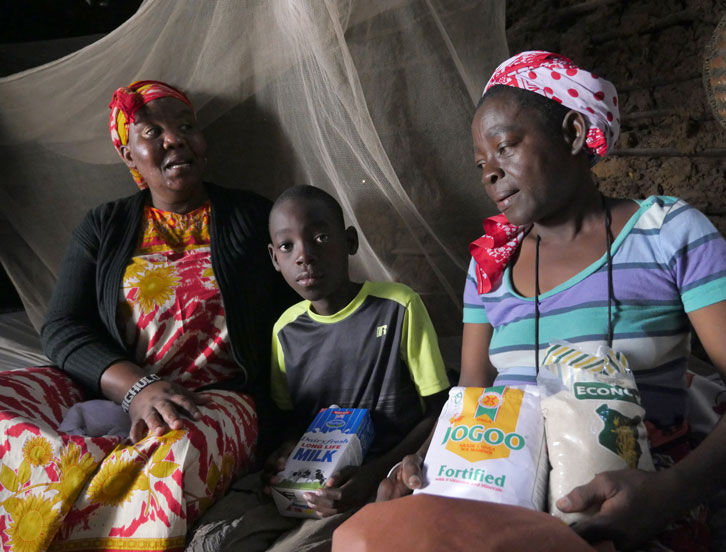
In some of Nairobi’s poorest neighborhoods, many women raise their children largely on their own, with little financial support and few opportunities for stable employment. Some have fled abusive relationships; others have been widowed or abandoned. Without access to savings, credit, or job training, many struggle simply to keep their children fed, housed, and in school.
Maryknoll works directly with these women to help them build more secure and independent lives. The project provides support for launching small businesses, along with access to healthcare services and assistance covering school-related costs for their children. Rather than offering only short-term relief, the emphasis is on equipping women with practical tools, such as basic business skills and startup capital, that allow them to generate their own steady income over time.
This ministry embodies the Catholic Social Teaching principle of the Option for the Poor and Vulnerable, giving particular attention to mothers and children who carry disproportionate burdens of poverty, and affirms the Dignity of the Human Person by recognizing every woman’s capacity for self-determination. It reflects Maryknoll’s charism of accompaniment, walking alongside women in difficult circumstances rather than simply providing aid from a distance, so that dignity and agency grow together.
Gifts to this project help mothers in difficult circumstances start small businesses, access healthcare, and keep their children in school, creating pathways out of poverty for entire families rather than temporary fixes for a single crisis.
by Dionel Rodriguez | Jul 30, 2020
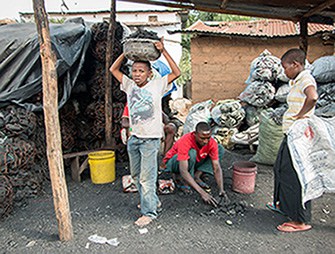
For many young people in Tanzania, poverty is the single greatest obstacle to a stable future, regardless of their ability or ambition. Without the financial means to pursue further education or skills training, talented students often see their opportunities close off entirely once they finish secondary school, if they are able to complete it at all.
Maryknoll helps break this cycle by supporting scholarships and vocational training for young people who would otherwise be unable to continue their education. Programs include practical trade skills such as carpentry, electrical work, and culinary arts, alongside more traditional academic scholarships, giving students multiple pathways toward stable, marketable careers suited to their individual interests and strengths.
This project reflects the Catholic Social Teaching principles of the Dignity of Work and the Option for the Poor and Vulnerable, affirming that every young person, regardless of family income, deserves the chance to develop skills that lead to meaningful, dignified employment. It also carries forward Maryknoll’s charism of integral human development, understanding that breaking cycles of poverty is itself a form of evangelization and hope made concrete.
Gifts to this project provide scholarships and vocational training that equip underprivileged youth in Tanzania with the tools to build stable careers, support their families, and contribute meaningfully to their communities’ economic future.
by Dionel Rodriguez | Aug 27, 2020
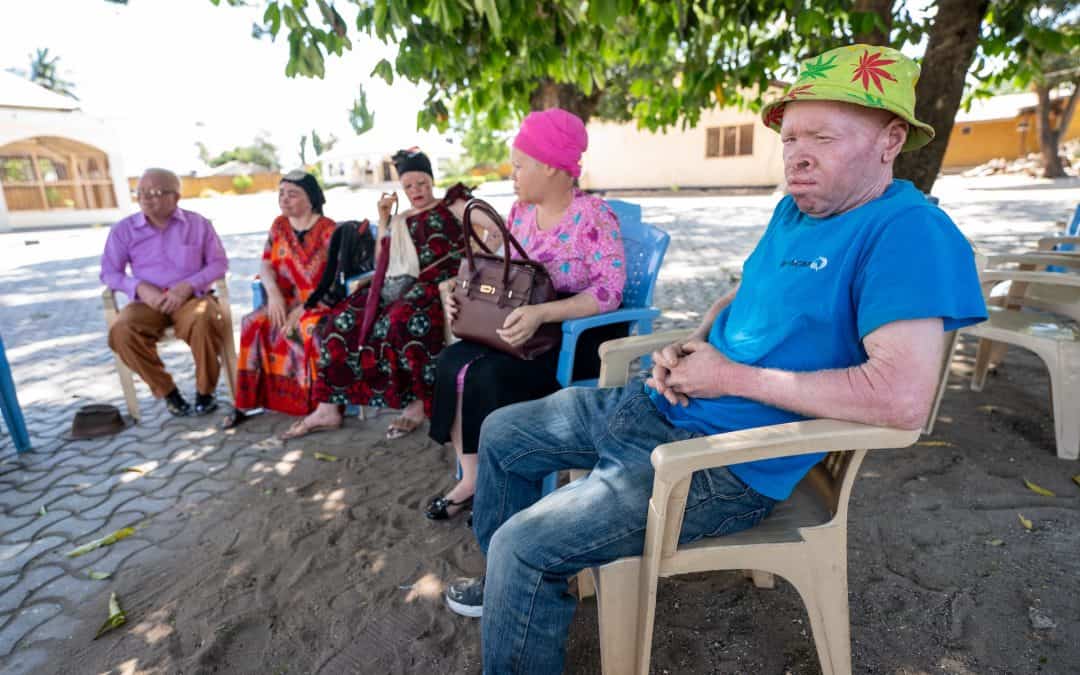
In Tanzania, individuals living with albinism often face profound social and physical challenges that go well beyond the medical realities of their condition. Harmful myths and superstitions have, in some communities, led to discrimination, social isolation, and in extreme cases, violence directed at people with albinism, particularly children. At the same time, the condition itself brings genuine medical needs, including heightened vulnerability to skin cancer due to a lack of melanin.
Maryknoll works to address both dimensions of this challenge, providing practical medical support alongside broader advocacy and education. Direct assistance includes sun protection supplies essential for preventing skin damage, healthcare services, educational support for children who may face barriers to school enrollment, and emergency assistance for individuals facing acute safety or medical concerns.
This ministry directly embodies the Catholic Social Teaching principle of the Life and Dignity of the Human Person, insisting that every individual’s worth is inherent and given by God, never contingent on physical appearance or freedom from harmful superstition. It reflects Maryknoll’s prophetic charism of standing with those pushed to the margins by fear and misunderstanding, offering both practical protection and a steady witness against the discrimination that puts lives at risk.
Gifts to this project provide medical care, sun protection, education, and advocacy that protect the safety and dignity of individuals with albinism in Tanzania, while working to change the harmful misconceptions that put them at risk.
by Dionel Rodriguez | Jun 1, 2020
HIV/AIDS has affected Kenyan communities for more than four decades, and while significant progress has been made in treatment and prevention, the disease continues to place a heavy burden on families, particularly in lower-income urban and peri-urban areas. Beyond the medical challenges, individuals living with HIV often face stigma, isolation, and disruptions to their livelihoods that compound the difficulty of managing a chronic illness.
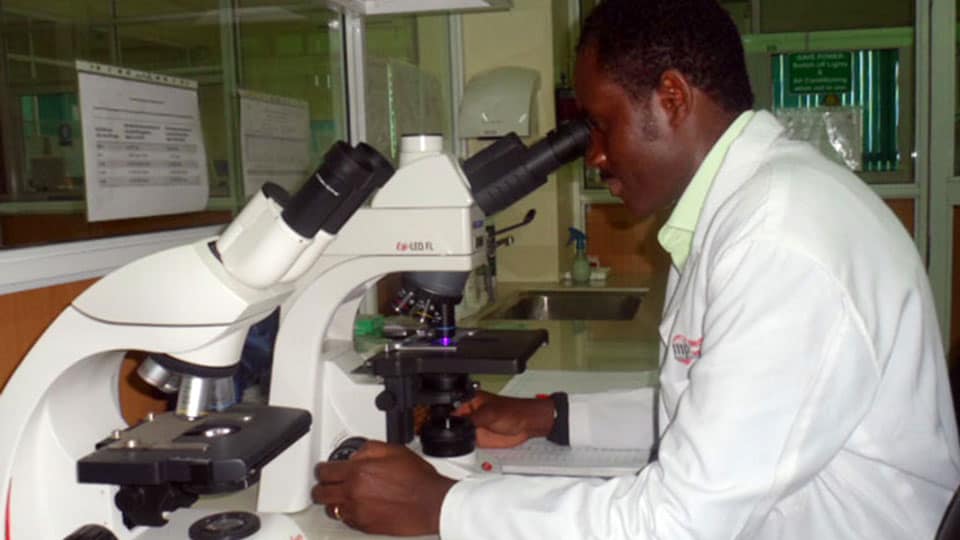
The Eastern Deanery AIDS Relief Program, supported by Maryknoll, has served as a comprehensive resource for individuals and families affected by HIV/AIDS in Kenya. The program provides life-saving antiretroviral treatment, HIV testing and counseling, maternal healthcare aimed at preventing mother-to-child transmission, prevention education, and spiritual support for patients and their families.
This ministry has embodied the Catholic Social Teaching principles of the Life and Dignity of the Human Person and the Option for the Poor and Vulnerable, treating each patient as someone made in God’s image regardless of diagnosis or social stigma. It reflects the Maryknoll charism of long-term presence among the suffering, remaining steadfastly alongside communities through decades of an epidemic that many other institutions have long since stopped discussing.
Gifts to this project sustain a program that has provided consistent, compassionate care to some of Kenya’s most vulnerable communities for over thirty years, helping ensure that life-saving treatment and support remain available to those who need it most.